
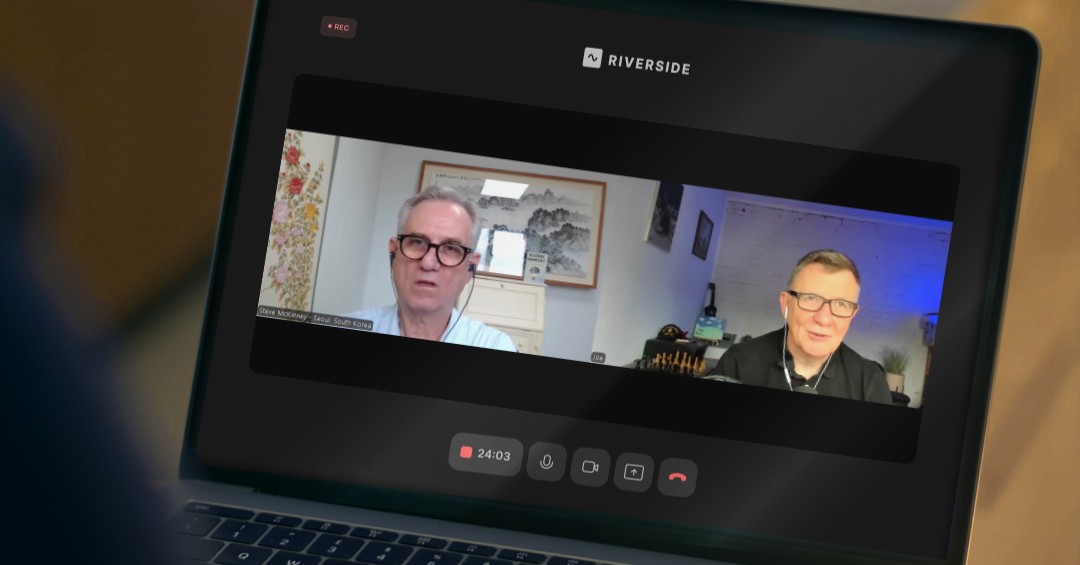
Global mindset leadership is no longer optional for senior executives. In my recent conversation with Joe Dalton on his “Getting It Wrong To Get It Right” podcast, we explored how curiosity and humility help leaders turn local roots into global reach. With AI, hybrid work, and globalization reshaping industries at speed, leaders can no longer rely on technical expertise alone. They must also cultivate empathy, self‑awareness, and the ability to read a room across cultures.
Early in the conversation, I shared a story from my own family. My uncle expanded his business selling Christmas trees to military bases worldwide without ever leaving his hometown. That example has stayed with me for years. It reminds me that global impact isn’t reserved for large corporations or frequent flyers. Global mindset leadership is less about how far you travel. It is more about how clearly you see the broader system your decisions affect. In addition, how proactively you position your offering and talent to serve that broader world.
In the episode, Joe and I talked about how so‑called “soft skills” have quietly become strategic skills in leadership and talent strategy. Empathy, self‑awareness, and cultural curiosity enable leaders to interpret silence, nuance, and non‑verbal cues when working across cultures. This is critical when hiring and developing leaders for cross‑border roles.
From my experience in executive search and leadership coaching across APAC, especially in South Korea, I see daily how these qualities differentiate leaders who succeed in global assignments from those who struggle. Technical competency gets you into the role; relational and cultural intelligence keeps you effective once you are there. Like my uncle’s Christmas tree business, the leaders and organizations that thrive are those that deeply understand their “local” strengths. Then, they translate them thoughtfully into global contexts.
We also explored how a global mindset leadership shows up in practice, not just conceptually. It’s evident in how leaders conduct meetings across time zones. How they listen to local voices before making regional decisions. And how they adapt their communication style without compromising their integrity.
The Christmas tree story is a simple illustration of proactive agility. My uncle anticipated demand beyond his immediate environment and positioned himself to meet it without abandoning his local base. In executive search and organizational design, proactive agility looks similar. Identifying hidden talent that can bridge markets. Preparing leaders for cross‑cultural moves before the strategy demands it. Designing teams that can respond quickly to global opportunities while staying rooted in local realities.
A recurring theme in the episode is authenticity, showing up consistently in a way people recognize and trust. Trust travels across cultures when people experience your words, actions, and decisions as aligned over time. When leaders pair authenticity with what I call proactive agility the discipline of anticipating change and adapting early they help organizations move from reactive to resilient.
We connected this to a coaching‑oriented leadership style. Leaders who coach rather than simply direct create room for diverse perspectives. Surfacing hidden talent and insights that might otherwise remain unseen. In global organizations, this can mean discovering individuals who, like my uncle, see possibilities beyond what is immediately visible and are ready to act on them.
Joe’s show is built around the idea that we often must “get it wrong” before we get it right. In talent strategy, this means being willing to experiment with new leadership profiles, new team structures, and new ways of integrating local and global perspectives.
The Christmas tree story is a reminder that global opportunity does not always look glamorous or obvious. It often begins with a leader who is deeply rooted in their context, curious about the world beyond, humble enough to learn, and proactive enough to act early. Those are precisely the qualities we look for in senior executives when we assess their readiness for global responsibility.
To learn how we support boards and CEOs in building global mindset leadership into their succession and search strategies, visit our Executive Search & Leadership Advisory page.
“Getting It Wrong To Get It Right – How Curiosity and Humility Drive Global Success” with Joe Dalton and Steve McKinney.