
A question I often encourage senior leaders to ask in succession discussions is this:
It is a simple question, but it gets to the heart of a much larger leadership issue. Too often, organizations confuse familiarity with readiness. A candidate may be highly respected, loyal, and successful in their current role. They may feel like the natural next step. But leadership at the next level is rarely about comfort alone.
Broader leadership roles require more than a strong track record in one environment. They demand cross-market judgment, enterprise thinking, adaptability, and the ability to lead when context is messy, ambiguous, and not fully shared by everyone in the room. In that sense, succession is not just about filling a role — it is about preparing someone for complexity.
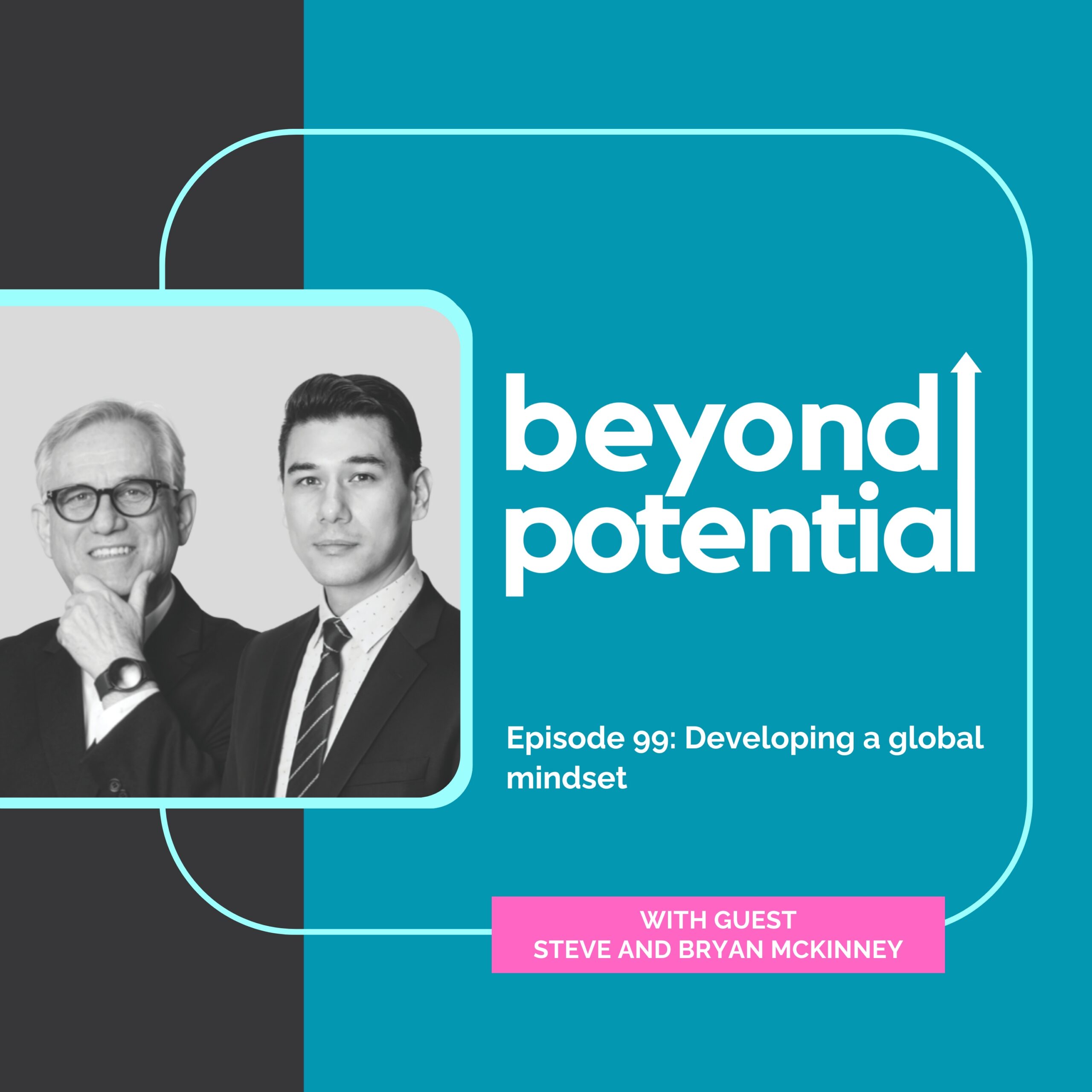
That lens shaped my recent conversation on the Beyond Potential podcast with Tom Emery and Tomas Mason, joined by my son and co-author, Bryan McKinney. The episode focuses on cross-cultural leadership and what it takes to lead effectively across different cultures. It was a thoughtful and enjoyable conversation, and one that ties directly to the leadership challenges so many organizations are facing today.
In succession planning, organizations often default to the safest choice. They look for the person who is easiest to imagine in the role, the one who already “fits,” or the one who creates the least internal friction. Those instincts are understandable, but they can also be limiting.
The challenge is that the next leadership role is often far more complex than the one before it. Leading across functions, markets, and cultures requires more than competence in a familiar setting. It requires the ability to make sound decisions in unfamiliar territory, bring people with different perspectives into alignment, and see beyond one’s own functional or cultural frame.
That is where global mindset becomes essential. Leaders today are increasingly expected to operate across boundaries — geographic, cultural, organizational, and generational. The leaders who thrive are not simply those who know the answers, but those who know how to ask better questions, listen carefully, and adapt without losing their core values.
A central theme in our discussion was that cross-cultural leadership is not about having all the answers in advance. It is about developing the discipline to seek context before judgment, and to resist the assumption that one’s own way of working is universal.
Another important theme was adaptability. The best leaders are able to flex their communication style, decision-making approach, and interpersonal rhythm without becoming inconsistent. They stay anchored in principle while adjusting their behavior to fit the people and the situation in front of them.
A third theme was readiness. Succession should not be treated as a reward for past performance alone. It should be treated as a future-readiness decision. The real question is not simply who has done well so far. It is who can carry complexity forward, who can grow into ambiguity, and who can lead across boundaries that are becoming more fluid every year.
If you are involved in succession planning, these are a few questions worth considering:
These are not abstract questions. They go to the core of whether an organization is building continuity or simply preserving comfort.
Listen to the episode
I am grateful to Tom Emery and Tomas Mason for the opportunity to join them on Beyond Potential, and to share the conversation with Bryan. It was a meaningful discussion about leadership, culture, and the realities of leading across difference.
The episode is now live here: Beyond Potential episode. You can also visit the Beyond Potential podcast and the Beyond Potential website for more episodes and resources.
In leadership, the real question is not whether someone has potential. It is whether they are ready for complexity.
Contact us if you need Executive search and leadership advisory
Our book: GLOBAL MINDSET: A Guide for Cross‑Cultural Leadership