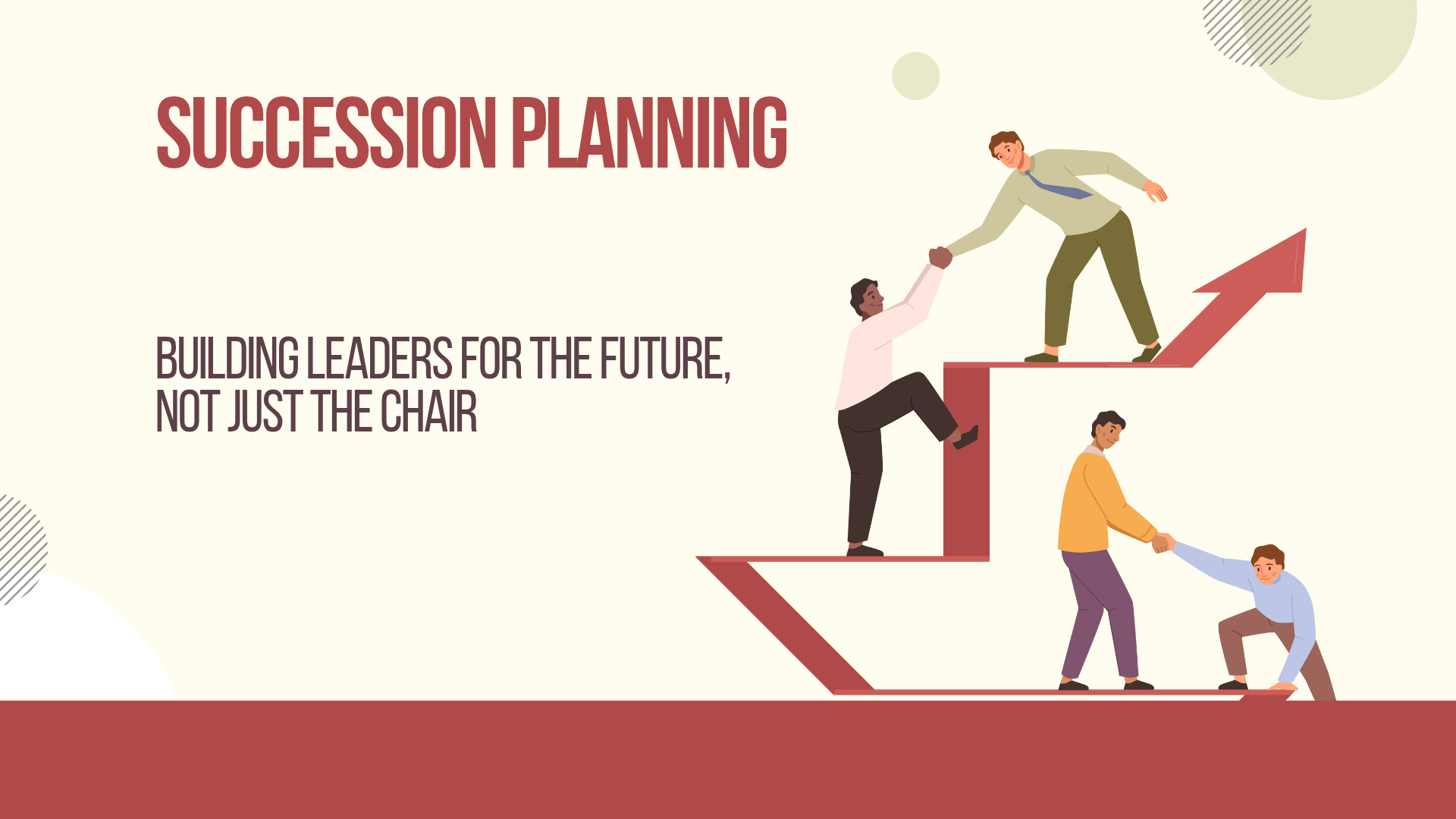
Succession planning should do more than identify who could replace a senior leader if they left tomorrow.
It should prepare the organization for the leadership challenges it will face next.
Yet many succession plans remain little more than replacement charts: a list of possible names, estimated readiness dates, and an assumption that the role itself will remain largely unchanged.
That approach creates false confidence.
A successor may be ready for the previous version of the role, while the business now needs a leader who can navigate a different market, operating model, technology environment, stakeholder landscape, or headquarters-local team relationship.
Effective succession planning is not a replacement plan. It is a future-readiness process.
A replacement plan asks:
A succession plan asks:
The first question is necessary for continuity.
The second is necessary for strategy.
Boards, CEOs, and CHROs need both. But they should not confuse one with the other.
The most common succession-planning mistake is defining the role by the current executive's experience and strengths.
A stronger process begins with the strategic context ahead:
The future role may require more enterprise perspective, learning agility, Global Mindset, proactive judgment, or coaching-style leadership than the role required in the past.
High performance in a current role is important evidence. It is not complete evidence of readiness for a larger one.
A leader may excel at functional execution but need development in enterprise influence. Another may have strong commercial results but need to deepen Global Mindset before leading across markets. A technically credible executive may need to build the capacity to develop other leaders rather than remain the person with every answer.
Assess readiness across four areas:
Can the leader make trade-offs for the good of the broader organization rather than only their function, market, or team?
2. Learning Agility
Can the leader recognize when past experience provides an incomplete view, seek new information, and adapt effectively?
Can the leader build alignment across different cultures, markets, and stakeholder expectations without assuming one perspective is universally correct?
Can the leader notice weak signals, surface risk early, and prepare others before urgency eliminates options?
A succession chart does not create a successor.
Readiness comes from deliberate experience: enterprise projects, cross-functional responsibility, market exposure, mentoring, executive coaching, stakeholder feedback, and opportunities to make meaningful decisions with appropriate support.
The most useful development assignments are not generic. They address the specific leadership challenge the future role will require.
Develop internal successors with seriousness and care. But a strong succession process also benefits from an external view of the market and the leadership capabilities available outside the organization.
External benchmarking helps boards and CHROs test whether their internal talent assumptions are realistic, identify gaps in the leadership pipeline, and make confident decisions when an appointment becomes critical.
Effective succession planning is a leadership-development system, not an annual HR exercise.
It connects business strategy, future role requirements, assessment, development, executive coaching, and external market intelligence.
If your organization is preparing for a senior transition, evaluating internal successors, or defining the leadership capability required for the next stage of growth, McKinney Consulting can help.
Start a Confidential Succession and Executive Search Conversation
Effective succession systems link leadership development to future strategy and use intentional development experiences, feedback, and ongoing review instead of relying on static lists of high-potential names.